Where to Sell a 1983 Quarter: Platforms & Tips
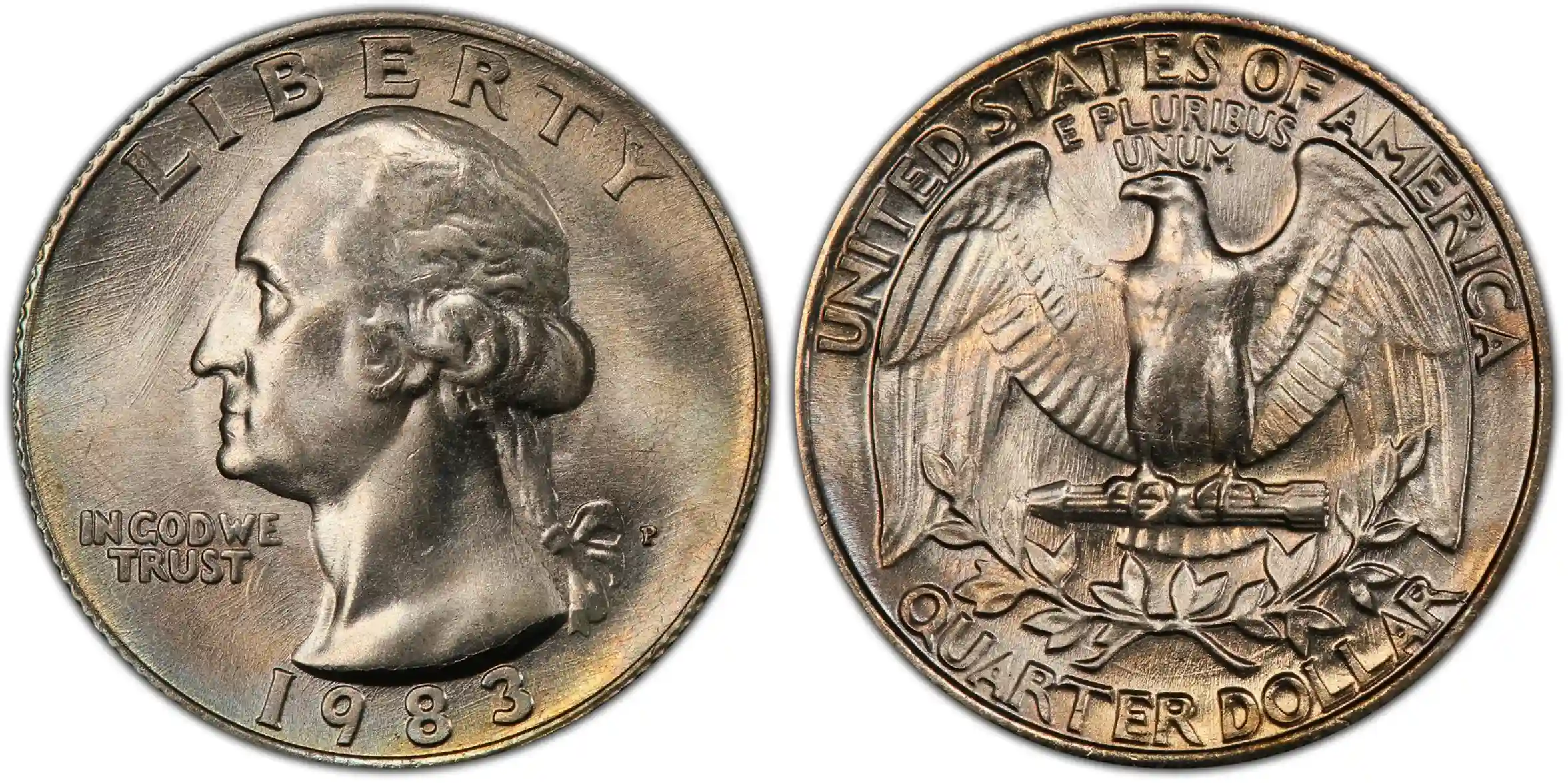
The 1983 quarter value for the circulated issue is $0.25, but for high MS issues, the price can be up to $20–$35 and more. Choose platforms for selling properly, and be aware of coin scammers on eBay.
Item Specifications
Year | 1983 |
Diameter | 24.30 mm |
Weight | 5.67 g |
Composition | 75 % Copper / 25 % Nickel |
Edge | Reeded |
Why the 1983 Washington Quarter is a Special Case
Most copper-nickel clad quarters from the 1980s carry little to no premium over face value. The 1983 issue breaks this mold due to supply mechanics.
The Great Mint Set Omission of 1983
A critical historical event sets the 1983 quarter apart from adjacent years. The United States Mint did not produce or sell official uncirculated mint sets during 1982 and 1983.
In typical years, hundreds of thousands of collectors purchase these sets directly from the government, which preserves a large supply of pristine, uncirculated coins for the future.
Because the government canceled the program for 1983, collectors could only obtain fresh quarters from original bank rolls or directly from circulation. The vast majority of the mintage entered commerce, suffered immediate friction, and lost its original condition.
Condition Rarity
This lack of government-preserved sets creates a dramatic case of condition rarity. While the total mintage numbers exceed one billion coins, almost all surviving examples show significant wear.
Condition | Value |
Circulated | $0.25 |
MS-65 | $30–$50 |
MS-67 | $1,300+ |
Evaluating Your 1983 Quarter Before You Sell
You must accurately evaluate the specific characteristics of your coin before you select a marketplace. Small details can cause the valuation to fluctuate from a quarter of a dollar to thousands of dollars.
Checking the Mint Mark
Feature | Philadelphia | Denver |
Mint Mark | P | D |
Mint Facility | Very Scarce | Scarce |
Circulated Value | $0.25 | $0.25 |
Uncirculated | $30–$50 | $20–$35 |
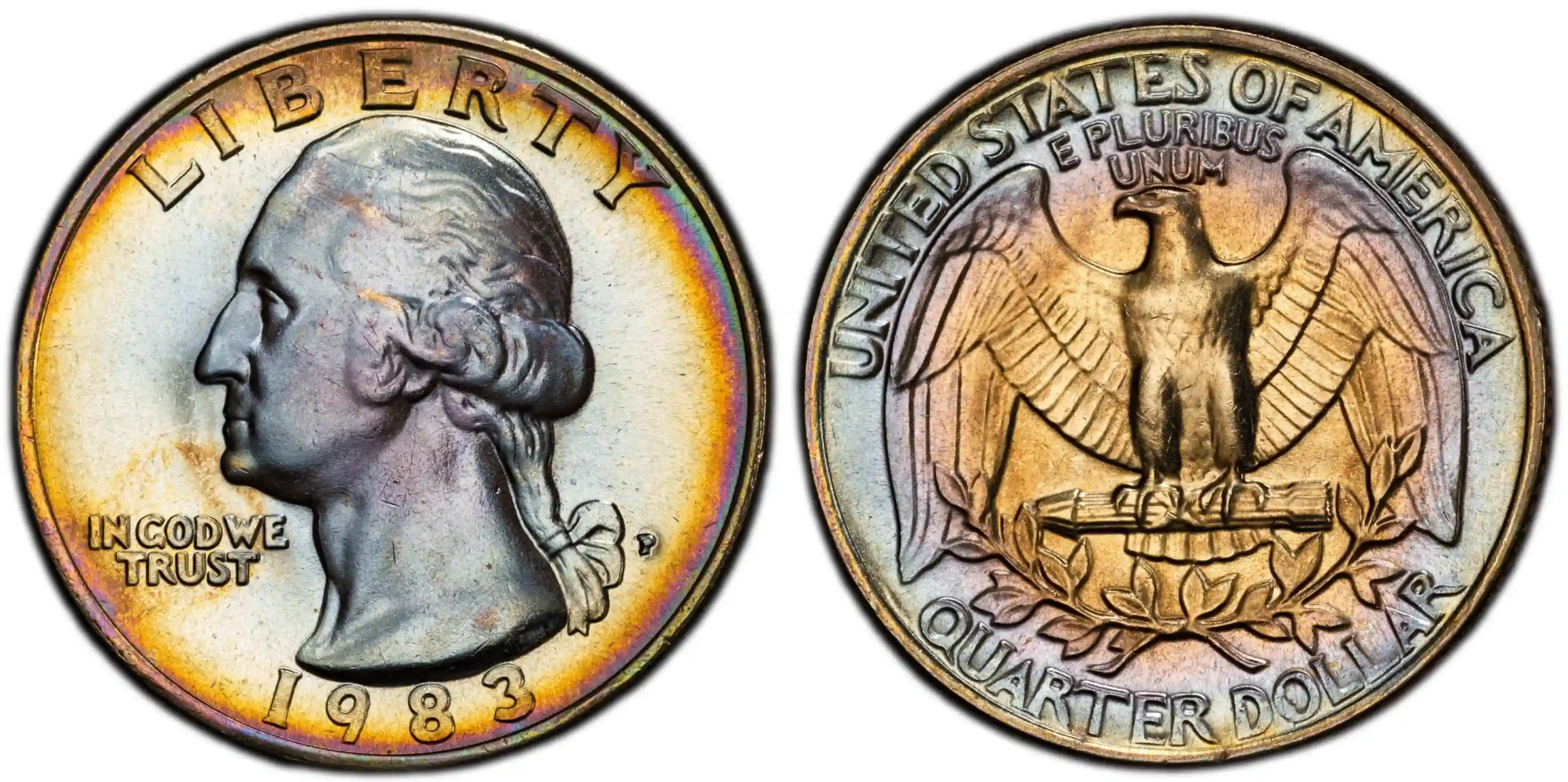
Look closely at the right side of the obverse face, just behind Washington’s ponytail, to find the mint mark.
Philadelphia – struck 673,535,000 coins. High-grade examples from this facility command a slightly higher premium due to severe production quality issues that year.
Denver – struck 617,806,446 coins. Pristine examples remain highly desirable, though slightly more common in choice condition than Philadelphia strikes.
Identifying Valuable 1983 Quarter Errors
Production mistakes multiply the value of a 1983 quarter, regardless of its overall wear. Search your coin for these three known anomalies:
The Spitting Eagle Variety – a vertical die crack develops on the reverse side between the eagle's beak and its left wing. This crack creates a raised line of metal that makes the eagle look like it spits.
Doubled Die Reverse – look for distinct doubling on the letters of the reverse, especially on the words.
Off-Center Strikes – mechanical feeding errors cause the die to strike the blank coin off-center. These errors leave a blank, crescent-shaped margin on the planchet.
Deciding If You Need Third-Party Grading
Professional certification acts as a catalyst for maximum profit, but it requires upfront expenditure. Professional Coin Grading Service and Numismatic Guaranty Company authenticate coins, assign a numeric score up to 70, and seal them in plastic holders called slabs.
Submit your coin for third-party grading only if you believe the surface condition scores an MS-66 or higher, or if you positively identify a major error. If your coin exhibits scratches, dull gray color, or smooth details from circulation, grading fees will easily exceed the value of the quarter.
Top Online Platforms to Sell a 1983 Quarter
Online venues offer direct access to global numismatic buyers. Choose the platform that matches the grade and certification status of your coin.
eBay
eBay serves as the largest open market for everyday coin transactions. It works perfectly for raw uncirculated quarters, lower-tier error varieties, or coins worth under $100.
Pros – access to millions of potential buyers, flexible auction or fixed-price formats, and simple smartphone listing tools.
Cons – high seller fees (around 13-15 %), risk of buyer returns, and intense competition from other sellers.
GreatCollections & Heritage Auctions
If you own a third-party certified 1983 quarter with a grade of MS67 or higher, bypass general consumer websites. Elite coins belong in specialized numismatic auction houses like GreatCollections or Heritage Auctions.
Pros – strict verification filters out fraudulent buyers, advanced collectors frequent these venues, and specialized platforms achieve record-breaking market prices.
Cons – seller commissions apply, and the cataloging process introduces waiting periods before you receive payout check funds.
Numismatic Forums and Facebook Coin Groups
Private collector groups on Facebook or dedicated forums like CoinTalk allow direct peer-to-peer sales.
Pros – zero commission fees, direct communication with buyers, and fast payments via secure online services.
Cons – requires established personal reputation within the community, lacks automatic platform protections, and invites low-ball offers from casual browsers.
Where to Sell Your 1983 Quarter Locally
If you prefer an immediate cash transaction over digital shipping logistics, local options provide a secure alternative.
Local Coin Shops
A local coin shop offers immediate appraisal and instant cash payment.
Pros – zero shipping hassle, absolute physical safety, and instant liquidity.
Cons – brick-and-mortar dealers must maintain profit margins and cover store overhead. They will offer wholesale prices, typically 50% to 70% of actual retail value.
Regional Coin Shows
A public coin show gathers dozens of professional dealers under one roof. You can walk from table to table, present your 1983 quarter to multiple prospective buyers, and spark competition to secure the highest cash bid.