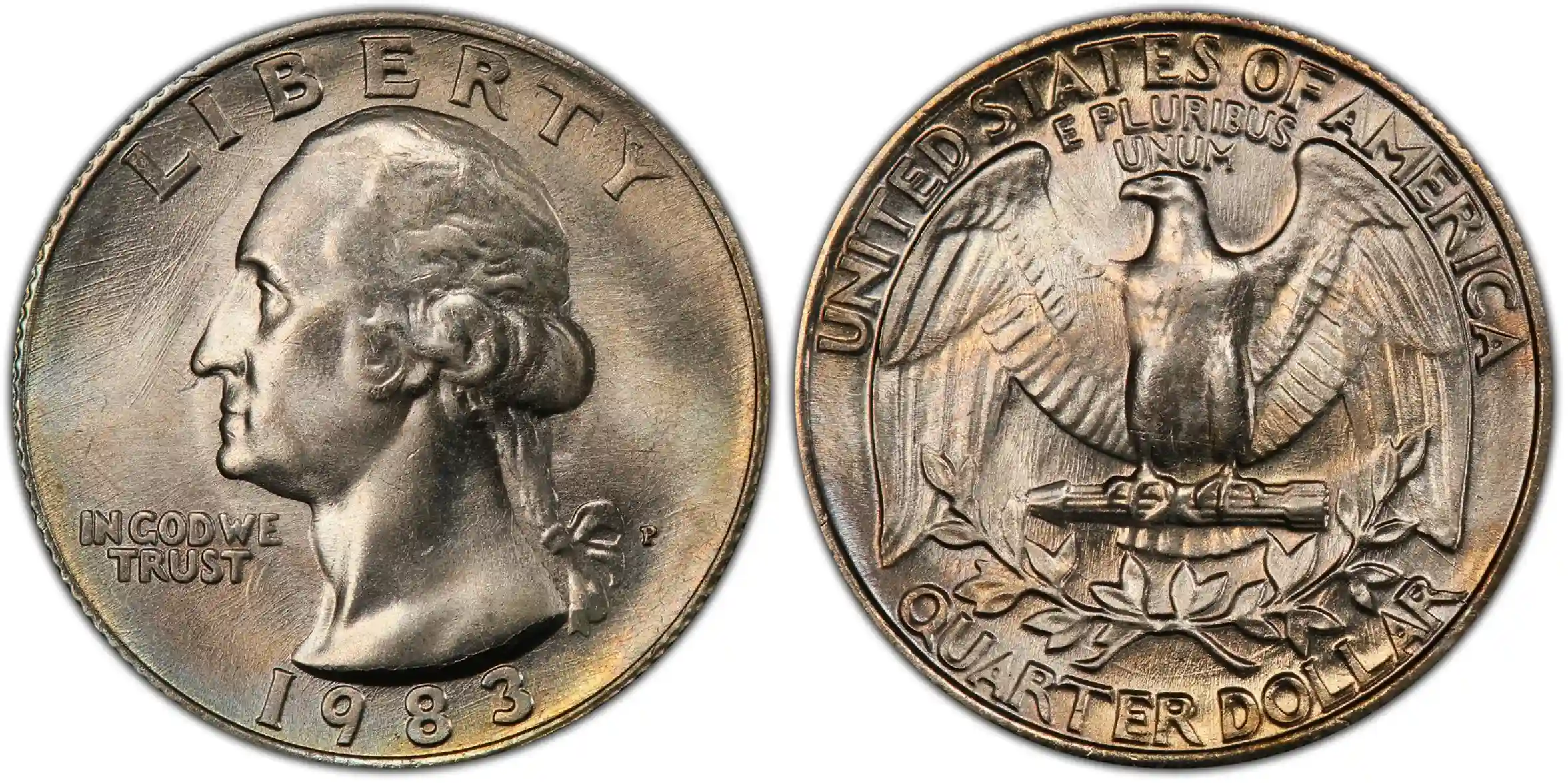
German Coins: From Deutsche Mark to Euro Era
Currency transitions serve as milestones for national identity.
German coins history underwent a massive structural shift in 2002.
Deutsche Mark functioned as a primary symbol of economic stability after 1948.
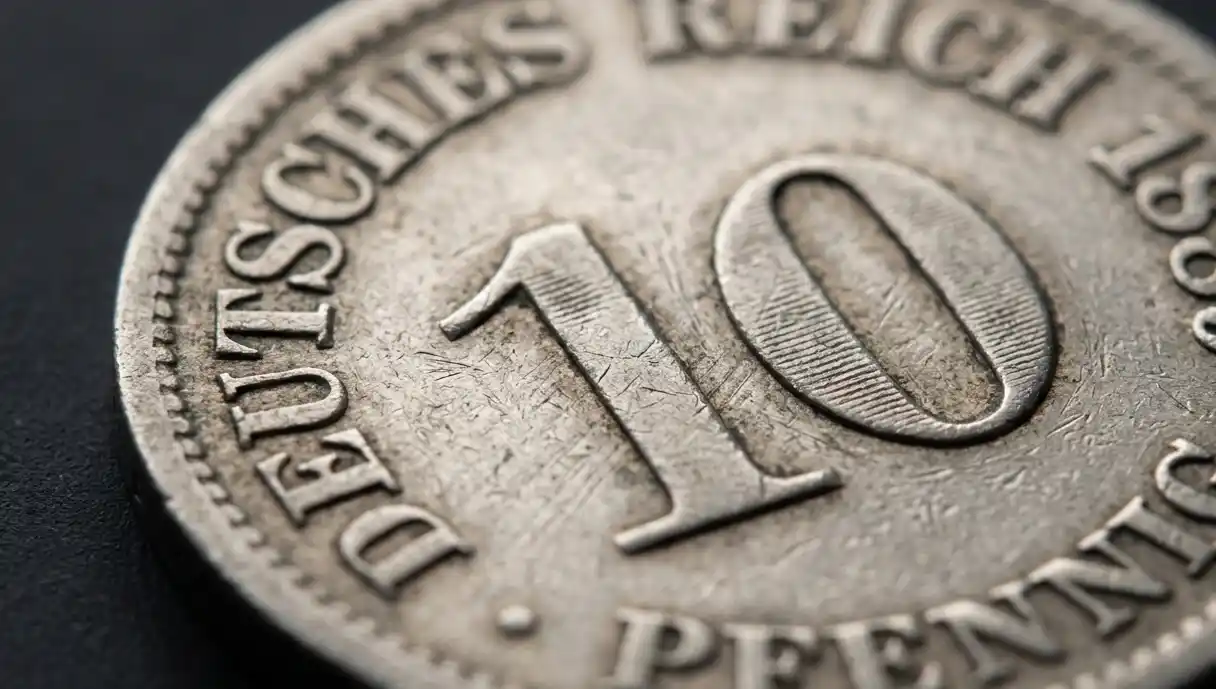
Coin Denomination | Total Mass | Metal Composition | Edge Detail |
1 Pfennig | 2.00 grams | Copper-plated Steel | Smooth |
5 Pfennigs | 3.00 grams | Brass-plated Steel | Smooth |
10 Pfennigs | 4.00 grams | Brass-plated Steel | Smooth |
50 Pfennigs | 3.50 grams | Copper and Nickel | Smooth |
1 Mark | 5.50 grams | Copper and Nickel | Reeded |
2 Marks | 7.00 grams | Three-layer Nickel | Lettered |
5 Marks (Pre-1974) | 11.20 grams | 62.5% Silver | Lettered |
Maintaining a 11.20-gram weight for silver pieces prevented widespread counterfeiting.
Plated steel for lower denominations minimized production costs while keeping the appearance consistent.
Scarcity Metrics and Minting Volumes
Mintage figures dictate the secondary market value for each specific year.
Low-volume production years create natural supply deficits in 2026.
50 Pfennig 1950 Bank deutscher Länder
Rare historical variant. Total volume reached only 30,000 units. Market price in 2026 hits 1,200 € for UNC condition.
5 1958 Mint Mark J
Most valuable year for standard circulation design. Production limited to 195,000 units. Auction results in Hamburg for 2026 average 850 €.
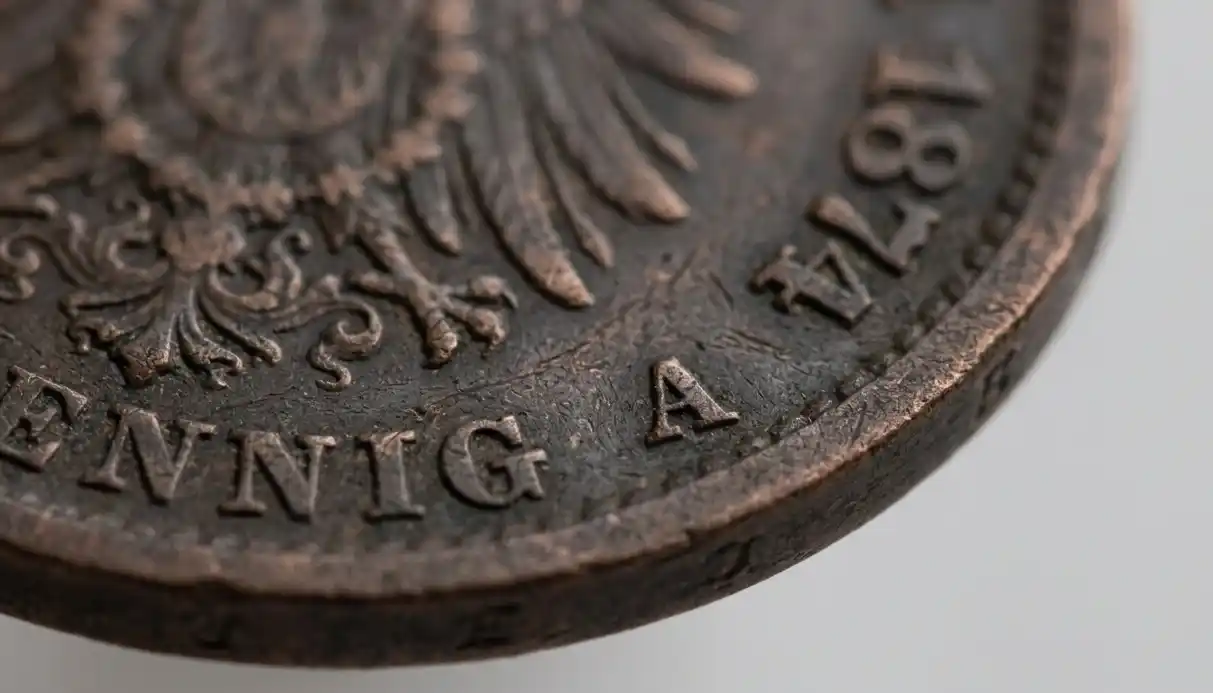
→ Mint A: Berlin → Mint D: Munich → Mint F: Stuttgart → Mint G: Karlsruhe → Mint J: Hamburg
Output differences between these five facilities cause price gaps between identical designs.
Market Trends for Commemorative Silver (2026 Data)
Special issues of 5 and 10 Marks act as reliable investment tools today.
Valuations track both the spot price of Silver and numismatic demand.
Issue Name | Release Year | 2026 Market Value | 5-Year Growth |
Germanisches Museum | 1952 | 1,450 € | +22% |
Schiller | 1955 | 980 € | +15% |
Markgraf von Baden | 1955 | 1,100 € | +18% |
Eichendorff | 1957 | 1,050 € | +12% |
Achieving a 22% growth for the 1952 issue stems from its status as the first Federal Republic commemorative.
High-grade specimens (AU and above) represent the majority of auction activity this year.
The Euro Transition: 2002 Structural Changes
2 Euro Specification | Target Value |
Total Weight | 8.50 grams |
External Diameter | 25.75 mm |
Rim Thickness | 2.20 mm |
Outer Ring | Copper-Nickel |
Center Part | Brass-Nickel |
Precision mass of 8.50 grams is mandatory for acceptance in European bank terminals in 2026.
Rare Euro Errors and Collector Premiums
German Euro coins gain value through manufacturing mistakes or limited series.
Market premiums apply to a very small percentage of the total supply.
"Old Map" Errors
Coins struck using outdated dies showing the pre-expansion EU map. Prices in 2026 fluctuate between 40 € and 150 €.
Star Rotation Flaws
Misaligned EU stars relative to the central design. Extreme cases sell for over 400 € at specialized auctions.
Elbe Philharmonic 2 Euro
Detailed architectural relief featuring the Hamburg landmark. MS67 specimens trade for 15 € in the current market.
Demand for modern German coins grows by roughly 4% annually due to ease of access.
Currency Redemption: Mark to Euro Exchange
Bundesbank continues to honor the Deutsche Mark for exchange in 2026.
No time limit exists for converting old currency into modern Euro.
→ Official Rate: 1 Euro = 1.95583 Marks
Recent April 2026 estimates suggest 12.1 billion Marks remain in private hands.
Cash found in household hoards returns to the central bank at a rate of 2.5% per year.
Declining physical availability of old Marks pushes collector prices far above the exchange rate.
Innovative Polymer Technology
Germany leads the market with integrated plastic rings in high-value coins.
"Climate Zones of Earth" series fundamentally changed the 5 Euro market starting in 2016.
Issue Series | Polymer Color | Coin Mass | 2026 Price |
Planet Earth | Blue | 9.00 grams | 85 € |
Tropical Zone | Red | 9.00 grams | 45 € |
Tundra Zone | Orange | 9.00 grams | 38 € |
In the Air | Transparent | 9.80 grams | 42 € |
Translucent rings provide a unique security feature visible against light.
Full sets containing all five mint marks (A, D, F, G, J) command 450 € in 2026.
Condition Grading and Market Liquidity
Coin quality in 2026 follows strict European preservation standards.
Surface damage significantly impacts the resale potential of German assets.
Proof
Mirrored fields created for the collector market. Capsule storage is mandatory for value retention.
Uncirculated
Original Mint luster present with no signs of wear. Small contact marks from production bags are permitted.
Extremely Fine
Minimal wear on the highest points of the design.
Grading Tier | Price Multiplier | 2026 Liquidity |
Proof | 3x – 20x | High |
UNC | 1x – 5x | High |
EF/VF | 0.1x – 0.5x | Medium |
Professional certification costs average 35 € per coin this year.
Investing in grading only makes sense for items valued above 100 €.
East German (GDR) Numismatics (1948–1990)
Currency from the former Soviet zone represents a distinct market sector.
Aluminum-based coins from the GDR require specific climate-controlled storage.
→ Material: 97% Aluminum mixed with Magnesium → 1 Mark GDR Mass: 3.00 grams → 2 Mark GDR Mass: 5.00 grams
Silver 10 and 20 Mark pieces from the GDR show faster price growth than Western counterparts in 2026.
Limited supply results from large-scale melting after German reunification.
Schinkel 10 Mark (1966) recently reached 1,100 € at a Leipzig auction.
Gold Mark and Investment Assets
Germany issued a final gold coin of 1 Mark denomination in 2001.
This release paved the way for current 100 and 200 Euro gold programs.
2001 Gold Mark 12.00 grams mass. Pure Gold (999.9). Market price in 2026 stays around 1,150 €.
UNESCO 100 Euro Gold 15.55 grams mass. Annual price growth averages 7% over the last decade.
Buying German gold coins remains a popular inflation hedge for European investors in 2026.
Counterfeit Detection Protocols
Modern copies of rare Marks require sophisticated verification.
Professional tools eliminate risk during high-value transactions.
Magnet Testing
Genuine Copper and Nickel Marks from West Germany do not react to magnets. Steel-core fakes are instantly identified using this method.
Edge Lettering Analysis
Text reading "Einigkeit und Recht und Freiheit" must have sharp, deep edges. Cast counterfeits show rounded, shallow lettering.
Mass Verification Digital scales must confirm the 11.20-gram standard for silver pieces.
High-end fakes in 2026 are most common among rare 2 Euro commemorative issues.
Regional Demand Patterns
German market activity varies by federal state.
Local mint marks often carry premiums in their respective regions.
Munich (Mint D)
High demand in Bavaria. Prices for local strikes can be 10% higher than other mints.
Hamburg (Mint J)
Primary focus for Northern German collectors.
Karlsruhe (Mint G)
Historically low output makes these coins the hardest to find in 2026.
Collecting "G" mint marks in UNC condition provides the best long-term growth potential.